News
INTERNATIONAL EDUCATION CONGRESS “EDUCATION FOR AN UNCERTAIN FUTURE” HELD IN DRESDEN
On 21 November 2026, the international education congress entitled “Education for an Uncertain Future” (Bildung für die ungewisse Zukunft) was held in Dresden, Germany.
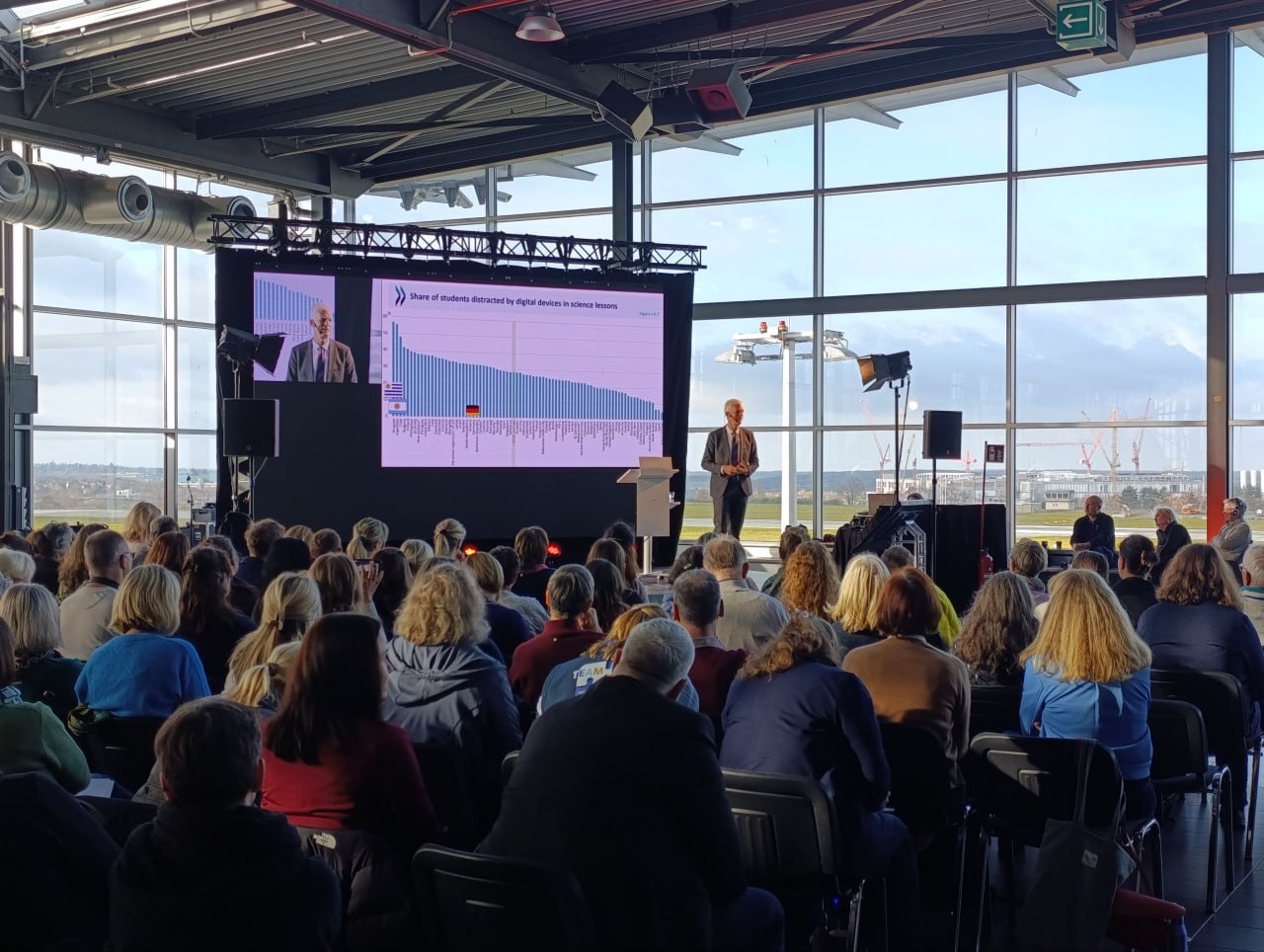
Scholars from the
Qori Niyoziy National Institute of Educational Pedagogy also participated in
this prestigious international event. The congress brought together leading
academics, education professionals and researchers from numerous countries
around the world.
The distinguished
speakers included Andreas Schleicher, OECD Director for Education and Skills
and coordinator of the PISA international assessment; John Hattie, a renowned
New Zealand education researcher and the author of the Visible Learning
research programme; and Professor Thomas Köhler of Dresden University of
Technology (Technische Universität Dresden).
The congress
addressed contemporary pedagogical issues, educational strategies and key
priorities for the future of education.
In his presentation,
John Hattie emphasised that student achievement is strongly influenced by
teachers' deliberate use of evidence-based teaching methods and pedagogical
practices.
Andreas Schleicher,
in turn, noted that in an ever-changing world, the mission of education must
extend beyond the transmission of knowledge. He stressed the importance of developing
students' adaptability, problem-solving abilities in complex situations and
independent thinking skills.
Professor Thomas
Köhler of Dresden University of Technology focused on the effective integration
of digital transformation and artificial intelligence technologies into the
learning process, as well as the creation of modern, open learning
environments.
The congress,
conducted in an open and interactive format, provided a platform for exchanging
views on a range of pressing pedagogical challenges. These included digital
education and the important question of whether artificial intelligence could
ever surpass teachers. Throughout the event, participants had the opportunity
to address international experts with questions of particular interest to them
and receive detailed responses.
The ideas and
perspectives presented at the congress demonstrated that, regardless of how
rapidly technology advances, the human factor, effective pedagogical approaches
and teachers' professional expertise will remain central to the future of
education.
Latest news